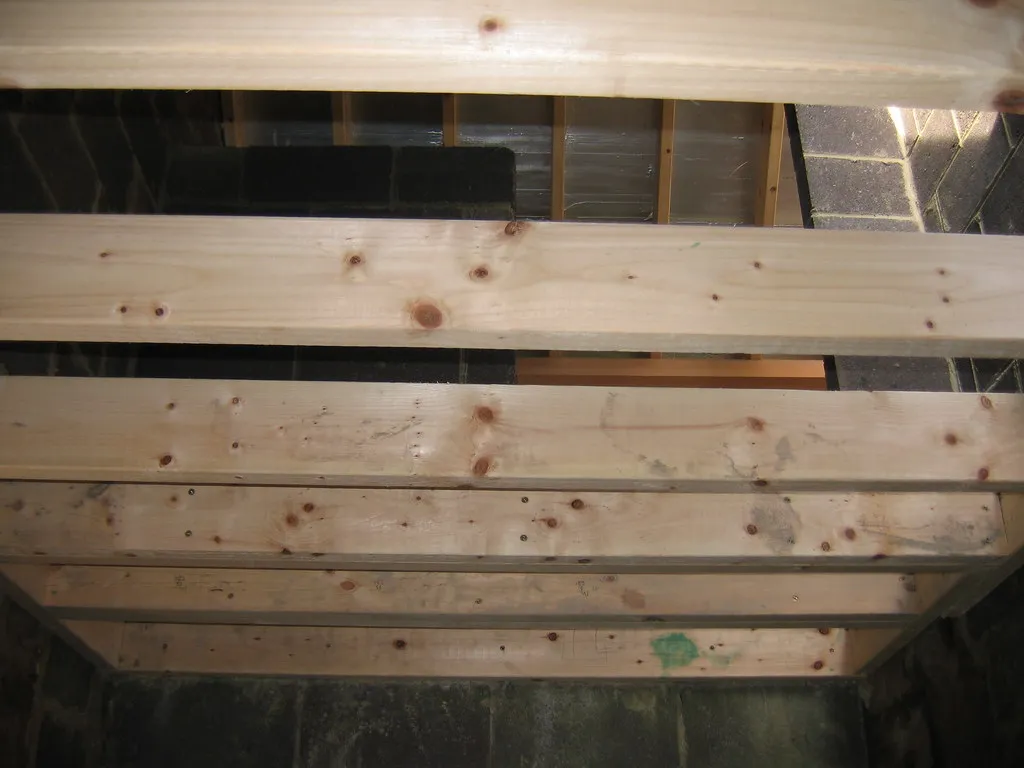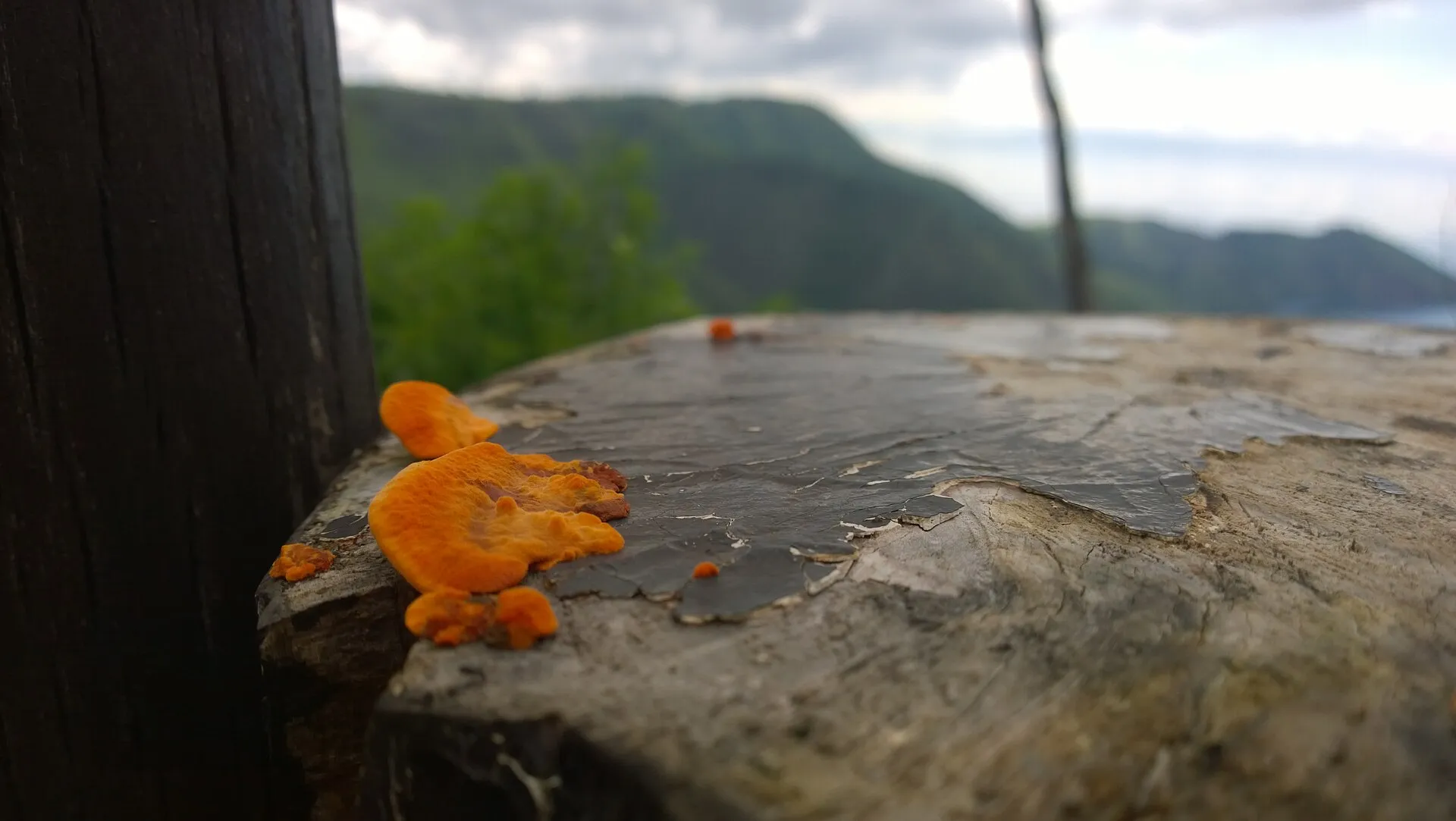
Crawl space mold remediation means treating the mold growing on the joists, subfloor and sill, then fixing the damp that let it grow. You need it when you can see fuzzy, white or dark growth on the wood, or when a musty smell in the house leads you to the crawl space. We do both halves, because one without the other doesn’t last.
Is treating the mold enough?
No. Treating the surface is half the job, and if the wood stays damp, the mold grows back.
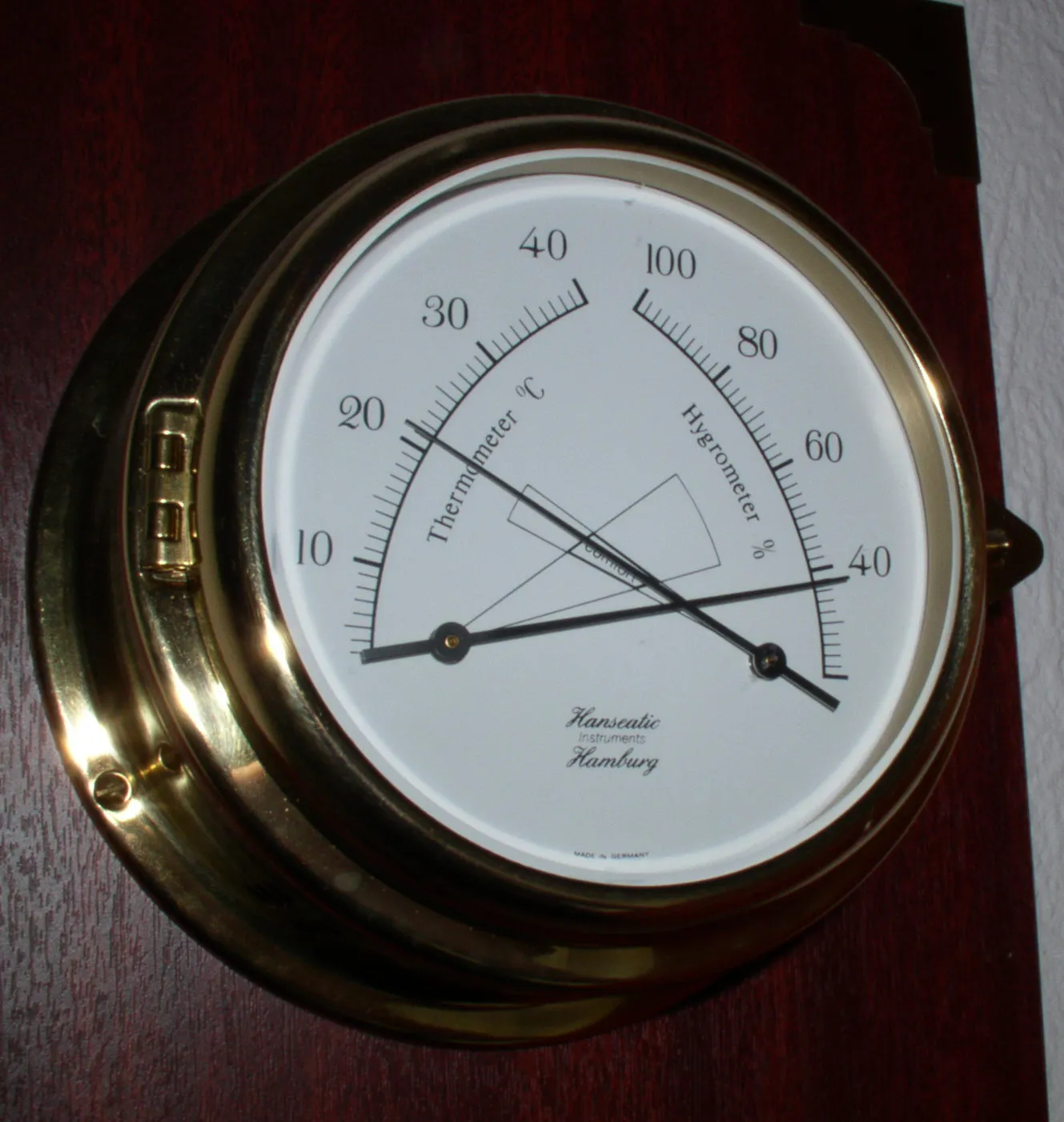
Mold needs moisture. The EPA’s guide to mold and moisture says to keep indoor relative humidity below 60%, ideally between 30% and 50%. A crawl space that sits wetter than that all summer will regrow whatever was treated. That is why we measure the humidity and the moisture in the wood before we quote: the readings tell us where the water is coming from.
Why does crawl space mold grow?
Because the air and the wood under the house stay damp for long stretches, mostly in summer. Vented crawl spaces are the worst for it.
In Advanced Energy’s field study in Princeville, North Carolina, vented crawl spaces were above 80% relative humidity for 86% of the summer and repeatedly reached condensation conditions. Upstate summer air is humid too: the mean July dew point at Greenville-Spartanburg is 67.6°F, and the framing under a house runs cooler than the air outside.
Other sources add to it: standing water after rain, a leaking pipe, wet insulation held against the subfloor, or bare dirt with no liner.
How do you stop it coming back?
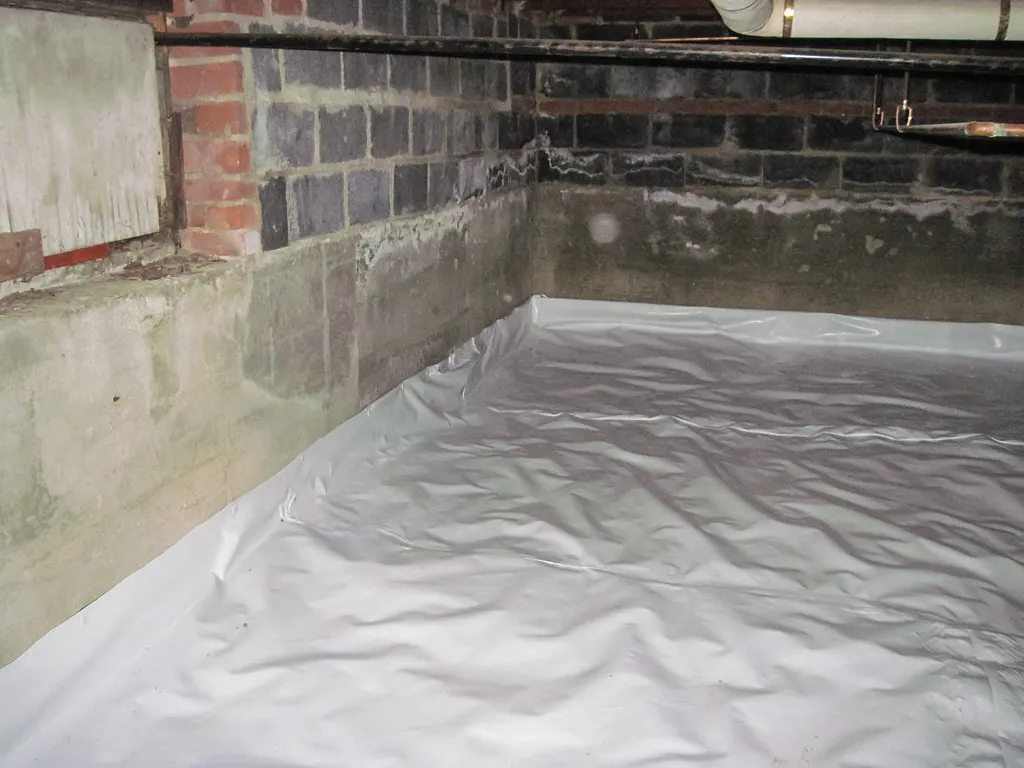
Close the crawl space and dry the air. A sealed liner, sealed vents and a dehumidifier keep the wood drier than open vents can.
The Department of Energy’s Building America program credits closed crawl spaces with cutting humidity by over 20%. The drying part is a crawl space dehumidifier set below the EPA’s 60% line, with a condensate drain so it runs without anyone emptying it.
Are you certified for mold?
No, and we don’t claim to be. We are a crawl space contractor: we treat mold on the framing and fix the moisture behind it.
If you want the mold tested, or anyone in the house has health concerns, hire an independent tester or talk to your doctor. A tester’s report also gives you a way to check the work afterwards.
How we do it
- We measure the humidity and the moisture in the wood before we quote, and note where the growth is.
- We clear debris and pull down wet or fallen insulation.
- We treat the mold on the framing.
- We fix the moisture: a liner over the ground with overlapped, taped seams run up the walls, the vents and access door sealed, and a dehumidifier with a condensate drain.
- We read the humidity again after the system has run a few weeks.
If the wood is soft rather than just stained, that is rot, and it needs crawl space repair as well as treatment.
What affects the price?
How much framing has growth on it and how hard it is to reach. Our ballpark for treating mold on the framing is about $900.
For comparison, Fixr puts crawl space mold remediation at $500–$2,000, and This Old House lists mold removal at $500–$4,000. Low clearance, heavy debris and soaked insulation all add time.
The moisture fix is priced on its own. A full system on a 1,000 sq ft crawl space with a dehumidifier runs about $4,900–$6,800 as a ballpark, and our encapsulation cost guide breaks that number down.
Is the musty smell from down there?
It can be, and the crawl space is the first place to look. Our guide to a musty smell from the crawl space walks through how to check before you spend anything.
We treat crawl space mold in Seneca, Clemson and across Oconee County. Get a ballpark from our crawl space estimator, or call us to come and take readings under your house.