A musty smell in a crawl space house often starts below the floor. Air from the crawl space gets pulled up into the house, so damp, stale air down there ends up in your rooms. Find and fix the moisture source, and the smell usually goes with it.
Why does crawl space air get inside?
Because houses tend to lose air high and draw it in low. Warm air rises and leaks out through the upper parts of a house, which pulls replacement air in near the bottom. In a crawl space house, some of that air comes up through gaps around pipes, wires and ducts. Building scientists call this the stack effect.
Ductwork in the crawl space can add to it. A leaky return duct pulls crawl space air straight into the system and blows it around the house. Wherever the house draws its air from, the smell follows.
What should I check first?
Start with a humidity reading, then look around with a good flashlight.
- Humidity. Leave a cheap hygrometer in the crawl space for a day. The EPA advises keeping indoor humidity below 60%, and closed crawl space dehumidifiers are commonly set between 50% and 60%. Readings that sit above 70% in summer point to a moisture problem. Our guide to crawl space humidity levels explains the numbers.
- Wet or fallen insulation. Fiberglass batts between the joists hold moisture, sag and drop to the dirt, where they stay damp and smell. We pull down wet or fallen insulation as part of the job, at about $0.60 a square foot.
- Standing water or wet soil. Look for puddles, dark wet clay or a stain line along the foundation after rain.
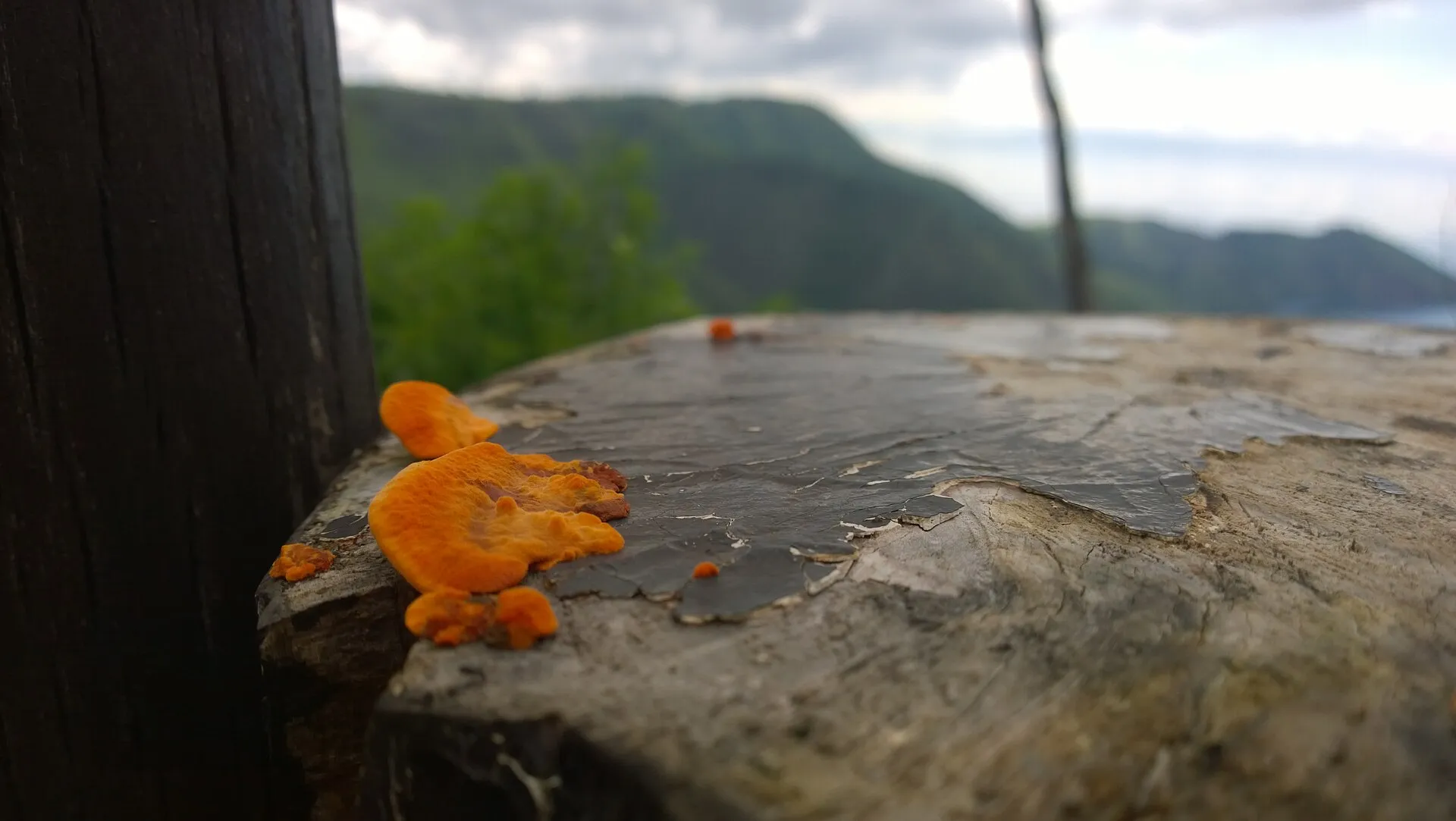
- Mold on the joists. Check the wood for white, gray or black growth, especially on the sill and the underside of the subfloor. Fungus like the growth in the photo needs damp wood to grow.
- Dead animals. A sharp, rotten smell that came on suddenly is more likely an animal than mold. Check near the vents and the access door, where animals get in.
- Plumbing leaks. Look under the bathrooms and kitchen, along supply and drain lines, and at the AC condensate line. A slow drip can keep one patch of soil wet for months.
When is it a mold job?
When you can see growth on the framing, or the wood itself reads wet. Wood moisture of 20% or more is what a South Carolina CL-100 report records as excessive moisture, and 28% or more as active decay conditions (SC Reg. 27-1085). Building Science Corporation sets the mold line lower: below 16% to never see mold.
Treating mold on the framing runs about $900 with us, as a ballpark, and our crawl space mold remediation page explains the work. Treatment only holds if the crawl space is dried afterward. Otherwise the conditions that grew the mold are still there.
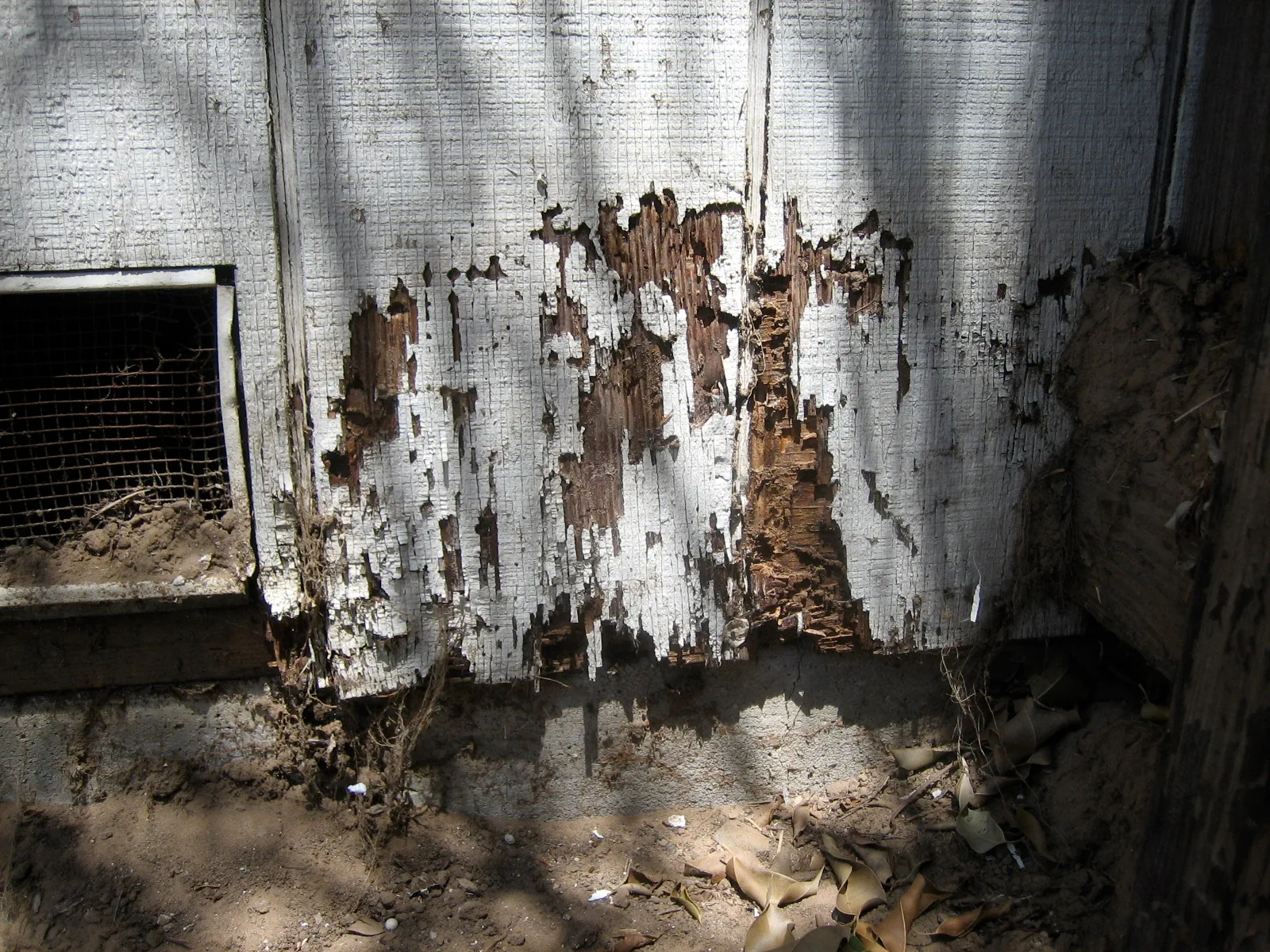
If the wood is soft or a screwdriver sinks into it, that is rot, not just mold, and it needs crawl space repair.
When is it a drainage problem?
When there is standing water, or the soil stays wet after storms. That needs fixing before anything else, because a liner laid over standing water just traps it.
Rain is not in short supply here. Clemson averages 52.38 inches a year, and August is the wettest month at 5.27 inches (NOAA). Clay drains slowly, so on a slope, water moves along the surface of the clay toward whatever is downhill. On sloped lake lots around Keowee and Hartwell, that can be the crawl space on the low side of the house.
Start outside. Clean the gutters, extend the downspouts and get the soil to drop about 6 inches over the first 10 feet from the house (ENERGY STAR). If water still gets in, a drain line and sump pump runs about $2,200 with us. See crawl space drainage and sump pumps.
Will encapsulation fix the smell?
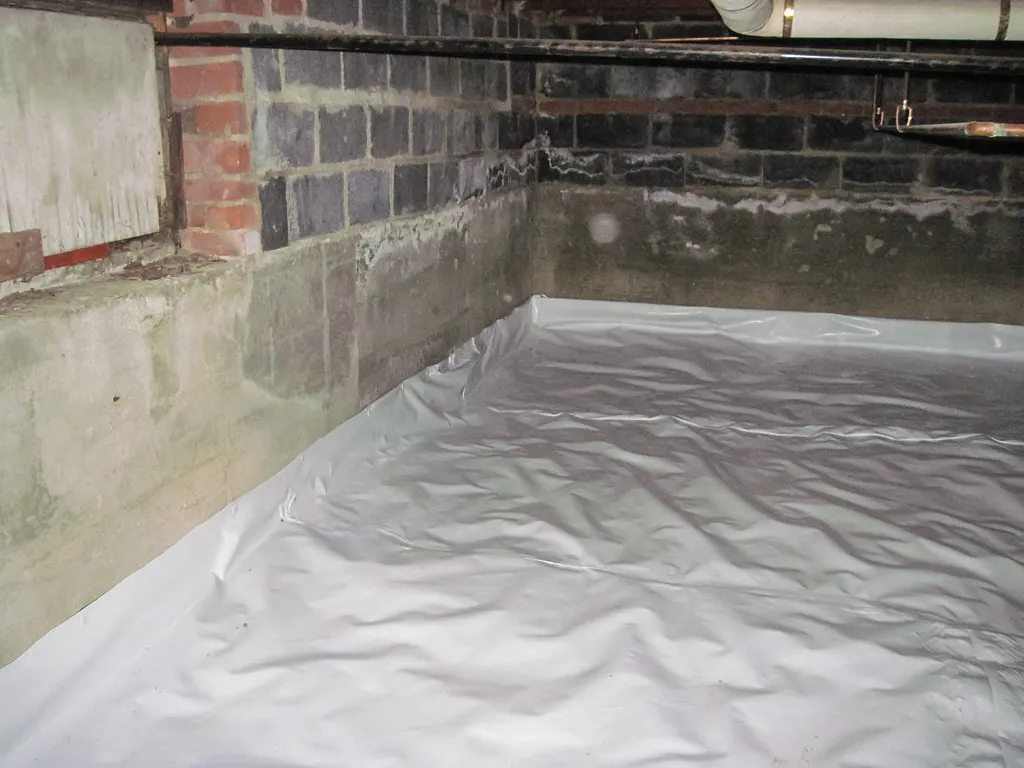
If the cause is damp air and soil, it should. In the Advanced Energy field study, closed crawl spaces were above 70% relative humidity only 5% of the time, while vented ones sat above 70% for 98% of the summer. A sealed liner cuts off the soil, and a dehumidifier keeps the air dry.
It will not fix a plumbing leak or a dead animal, and it should not go in over standing water. Deal with those first. Our guide on whether encapsulation is worth it covers when it is the right call.
Once you know the source, our estimator gives a ballpark for sealing and drying the crawl space. Or call us, and we will measure the humidity and wood moisture before we quote.