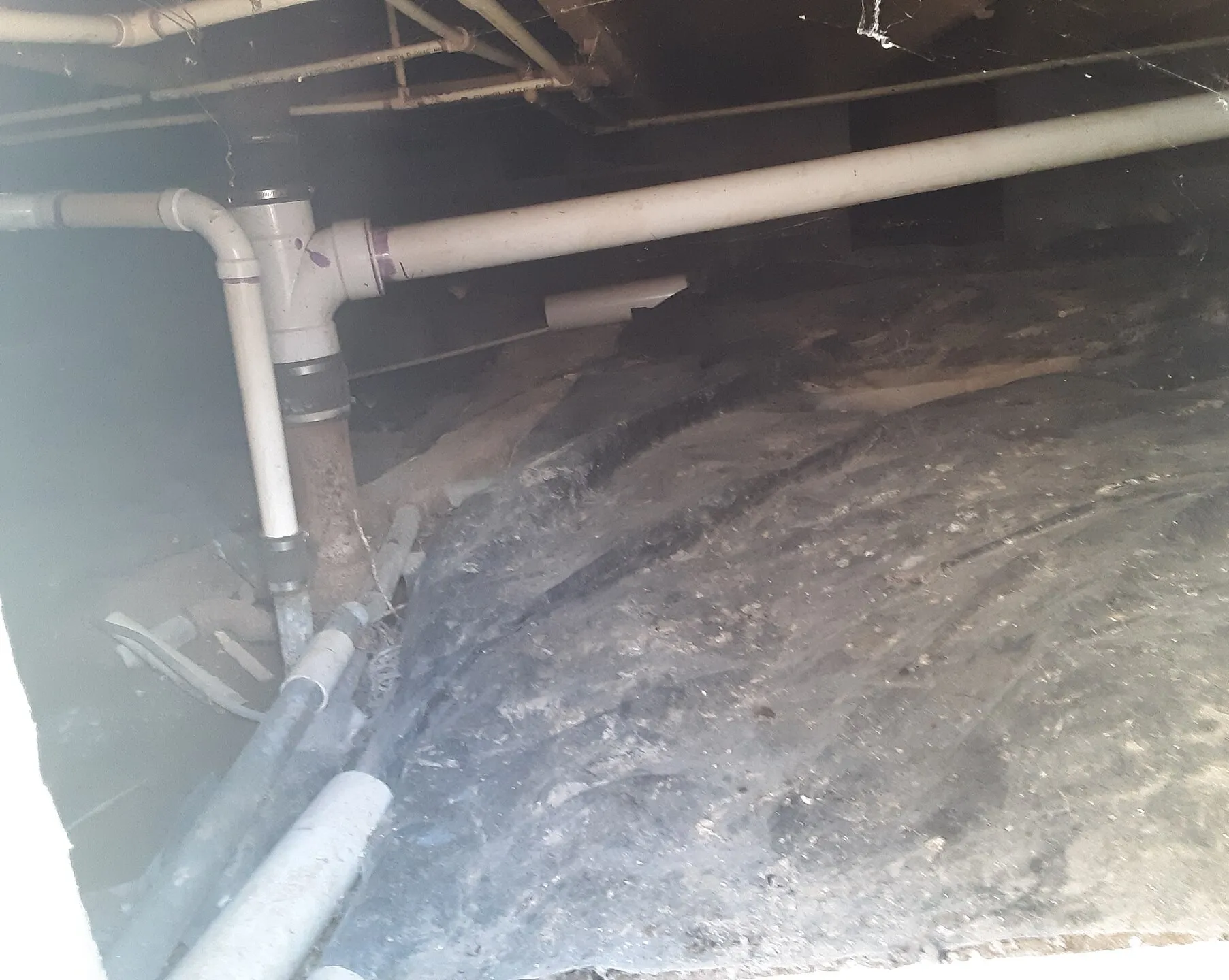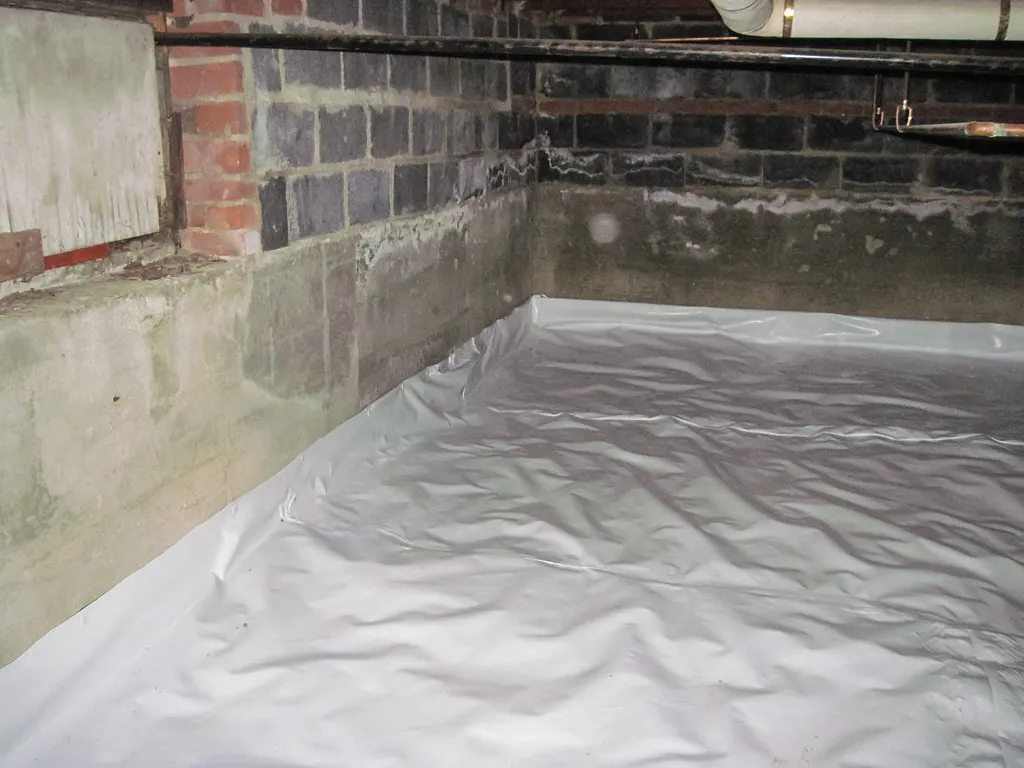
Crawl space encapsulation is worth it when your crawl space is actually damp: high summer humidity, wet wood, sweating ducts or a musty house. It is not worth it if the crawl space is already dry, if the house sits on a slab, or if gutters and grading would fix the water for far less. It is not a scam, but it is easy to oversell, so measure before you buy.
When is encapsulation worth it?
It pays off when readings show the crawl space is wet, and in an Upstate summer that is common for a vented crawl space. At Greenville-Spartanburg airport the mean dew point in July is 67.6°F (NOAA), and summer crawl space soil and framing are cooler than the outdoor air. So venting brings moisture in rather than drying the space (Building Science Corporation).
The best evidence is the Advanced Energy field study of 12 identical houses in Princeville, North Carolina, in 2003 and 2004:
- Vented crawl spaces sat above 70% relative humidity for 98% of the summer and above 80% for 86% of it.
- Closed crawl spaces were above 70% only 5% of the time and never reached condensation conditions.
- Over 11 months, the closed houses saved 15% on energy with floor insulation and 16% with wall insulation. Cooling-season savings were 21% and 36%.
The Department of Energy’s Building America program cites 15–18% energy savings and humidity reduced by more than 20% for closed crawl spaces.
Signs it is worth it in your house: summer readings above 70% in the crawl space, condensation on ducts or pipes, and wood moisture at or above 20%, the level a South Carolina CL-100 report calls excessive moisture.
When is it not worth it?
When the crawl space is dry, when there is no crawl space, or when the water has a cheaper fix.
- Your crawl space is already dry. If a hygrometer stays under 60% through July and August and the wood is dry, you may not need it. Our guide to crawl space humidity levels explains the targets.
- Your house is on a slab. There is nothing to encapsulate. Slabs now make up 88% of new single-family homes in the South, and crawl spaces 8%, down from 38% in 1971 (Census Survey of Construction).
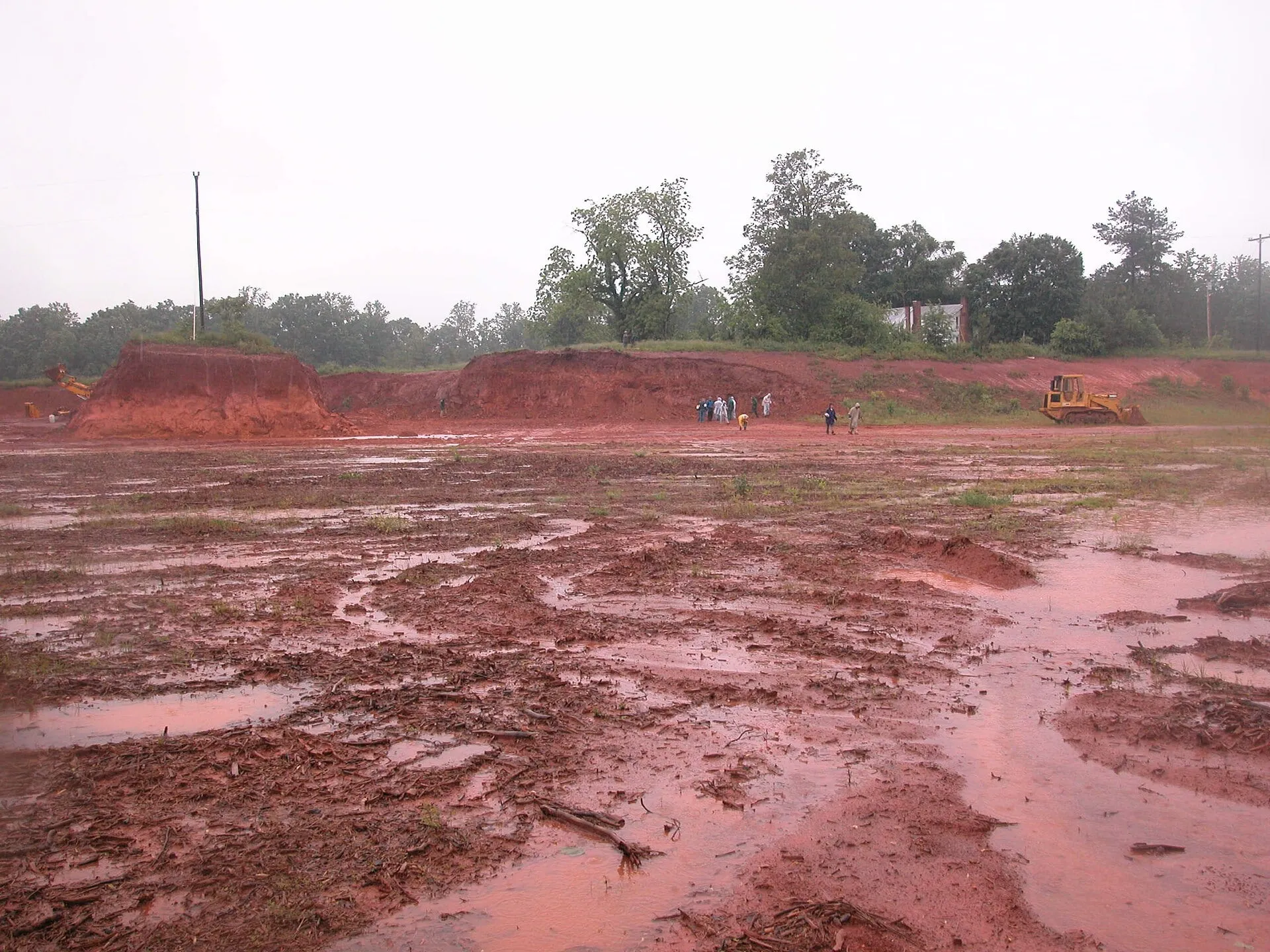
- Gutters or grading would fix it. If water only shows up after storms, start outside. Clean the gutters, extend the downspouts and get the soil to drop about 6 inches over the first 10 feet from the house (ENERGY STAR). On red clay that matters, because clay drains slowly and water on a slope runs along its surface toward whatever is downhill.
What are the downsides?
There are four real ones, and anyone selling you encapsulation should be willing to talk about each.
- Cost. Most jobs nationally run $5,000 to $15,000 (HomeAdvisor). Our ballpark for 1,000 square feet is $4,900–$6,800, and our encapsulation cost guide breaks that down.
- The dehumidifier runs on electricity. How much it uses depends on the machine and how wet the space is. The filter needs cleaning and the condensate drain has to keep flowing, or the humidity creeps back. Our crawl space dehumidifier page covers the install.
- Termite inspections get harder. A liner or foam board can hide termite tubes on the foundation wall. South Carolina’s wood infestation rule says the required one-year termite warranty on new construction “shall not extend to” structures with sealed or encapsulated crawl spaces. We leave an inspection strip at the top of the wall, and you should talk to your termite company first. Our guide to termites and the CL-100 has the detail.
- It needs looking after. A torn liner or a clogged drain undoes the work. We read the humidity again after the system has run for a few weeks, and a cheap hygrometer lets you keep an eye on it after that.
Is crawl space encapsulation a scam?
No. The building science behind it is sound, but some sales pitches are not. Be wary of:
- a dehumidifier sold for a crawl space that will stay vented, where it fights the outdoor air
- an offer to close the vents without a sealed liner and a drying system, which can make things worse
- a quote from someone who never measured humidity or wood moisture
- a claim that encapsulation fixes radon
On that last one: encapsulation is not radon mitigation, though a sealed liner is the base that sub-membrane suction is built on. EPA does not recommend sealing alone. Test first.
Is it required by code?
No. South Carolina enforces the 2021 International Residential Code with state modifications, and the code still allows vented crawl spaces. If you do seal one, section R408.3 sets the rules: a continuous ground vapor retarder with lapped, sealed seams, and a way to dry the air, such as a dehumidifier sized to the manufacturer’s specifications (SC Reg. R-8-1221). So it is a choice, and the right answer depends on what your crawl space measures.
What should I do first?
Put a hygrometer in the crawl space for a few weeks of summer, and look for standing water after a hard rain. If the numbers are high, our estimator gives you a ballpark, and we measure before we quote. Or call us and we will talk it through.